
Erwin Wurm, Horse (Performative Sculptures series), still from the video’s performance in the artist’s studio, 2015
© Erwin Wurm, ARS – Artists Rights Society, New York, USA, 2026

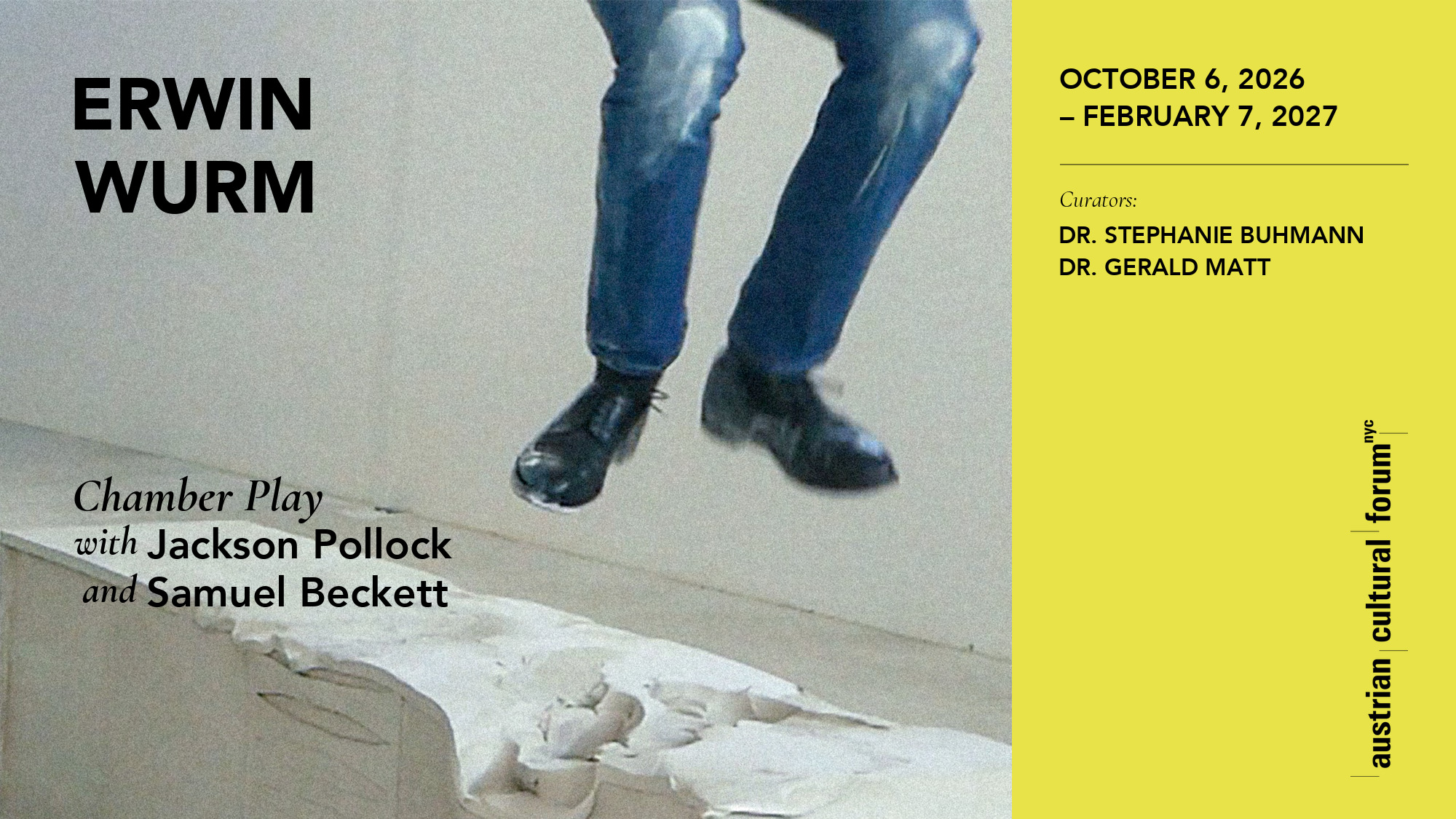
OCTOBER 6, 2026 - FEBRUARY 7, 2027
Erwin Wurm: Chamber Play with Jackson Pollock and Samuel Beckett
Open daily from 10am – 6pm
Austrian Cultural Forum New York
11 East 52nd Street, New York
Curated by: Head of Visual Art, Architecture & Design, Dr. Stephanie Buhmann & Dr. Gerald Matt
ABOUT THE EXHIBITION
The Austrian Cultural Forum New York – housed in a landmark building designed by the Austrian architect Raimund Abraham, whose work explored architecture as a spatial, social, and intellectual proposition – is pleased to present Erwin Wurm: Chamber Play with Jackson Pollock and Samuel Beckett, an exhibition that brings together three artists whose practices, though radically different, are rooted in deeply personal reflections on the human condition. As suggested by its title, Chamber Play evokes the intensity of a multi-faceted theatrical encounter, in which action, the testing of limits, the absurd, and existential complexities emerge as common threads.
At the center of the exhibition is the work of Austrian artist Erwin Wurm (b. 1954). For almost five decades, he has challenged conventional definitions of sculpture while exploring the absurdity of everyday life and the fragile relationship between individuals and their surroundings. Through paradox, contradiction, and physical action, Wurm transforms familiar objects, gestures, and situations into moments of reflection and disruption. For example, his One Minute Sculptures invite individuals to follow simple instructions and create temporary, precarious compositions with their own bodies and everyday objects. In another body of work, his Performative Sculptures, recognizable forms derived from everyday objects or architectural elements are altered by the artist through performances carried out in the intimacy of his studio. Even upon completion, they preserve the physical traces of their making, revealing the instability of familiar forms and situations.
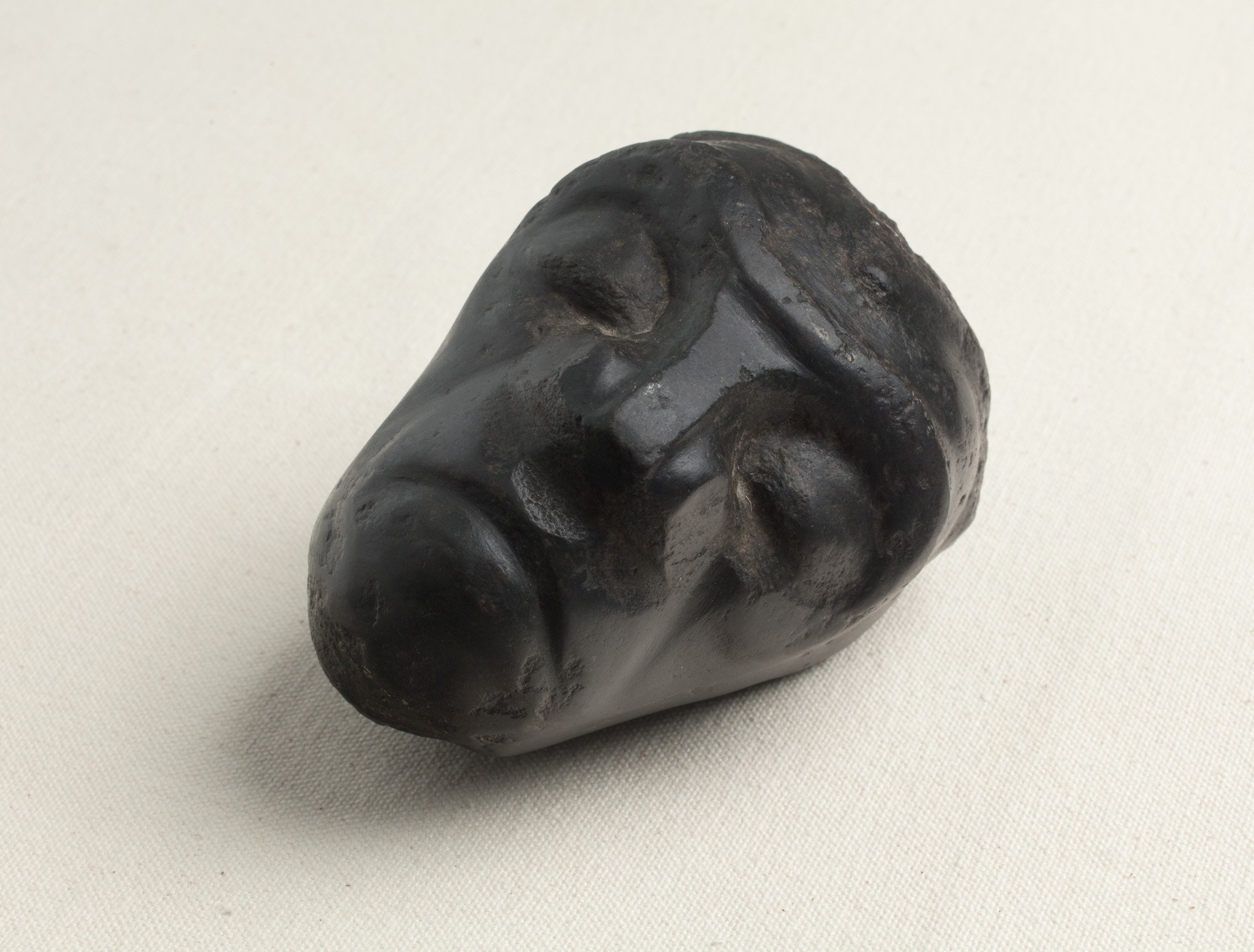
Jackson Pollock, Stone Head, c. 1930-1933. Courtesy of Private Collection, New York. © The Pollock-Krasner Foundation/Artists Rights Society (ARS), New York.
Indeed, the affinities between Erwin Wurm, Jackson Pollock (1912–1956), and Samuel Beckett (1906–1989) arise from their shared engagement with the limitations of their respective mediums. For example, Pollock rejected the traditional easel and made the physical act of painting central to his work. By placing his canvases directly on the floor, allowing him to move around and within the composition, and using his entire body in rhythmic, gestural movements, he transformed his paintings into actual records of action, chance, and bodily energy. Beckett, meanwhile, disrupted the conventions of language and theater through silence, repetition, and fragmented actions, exposing the tensions between isolation, communication, and meaning. The characters in his plays often appear trapped within cycles of waiting and repetition. Wurm similarly expanded sculpture beyond the fixed object, using transformation, physical action and the repetition of gestures to question perception, identity, and the conditions of everyday life.
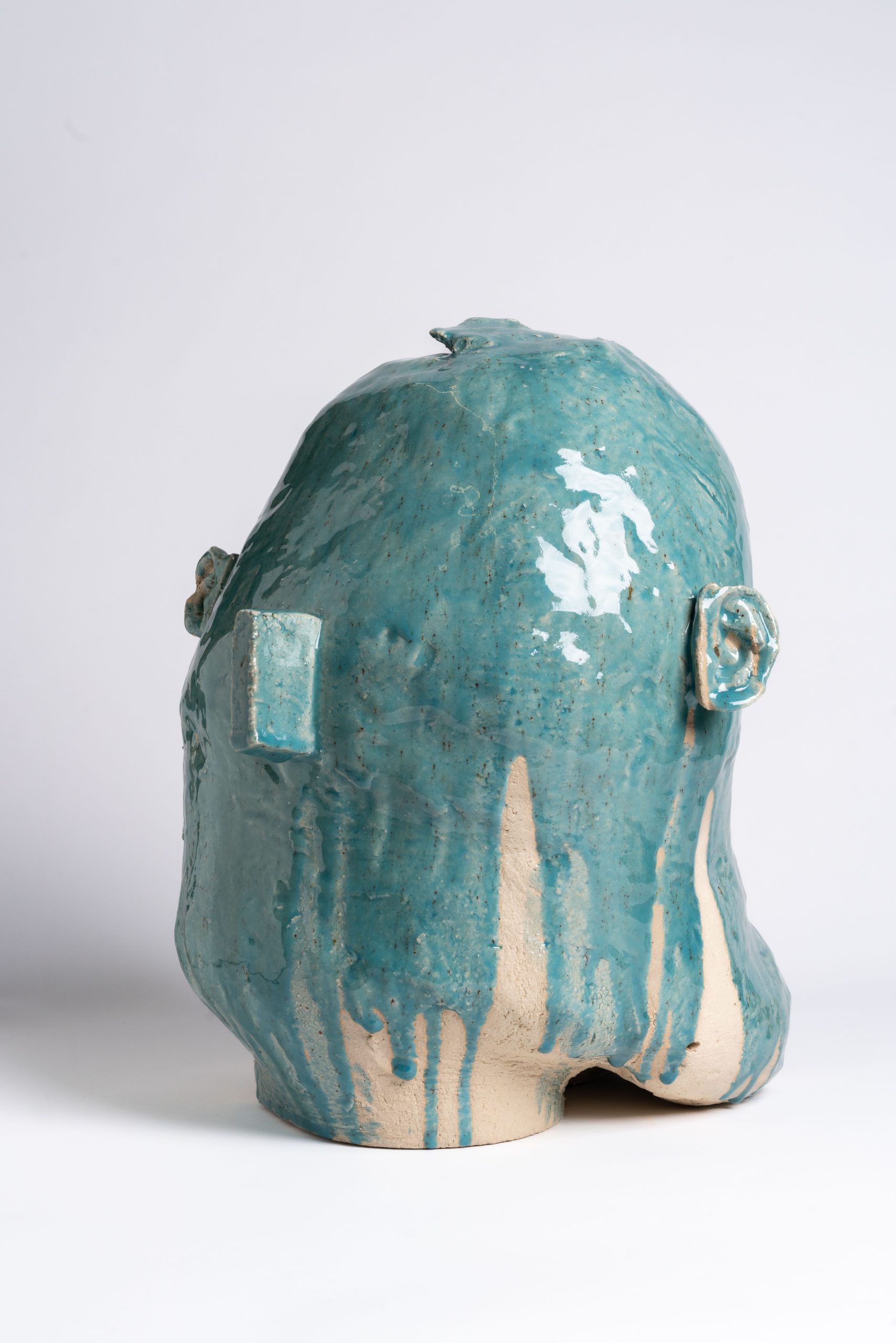
Erwin Wurm, Sniffer / Ears (Earth People series), 2025, © George Waid/Gmundner Keramik
In addition to bringing together sculptures, films, photographs, and works on paper from across Wurm’s oeuvre, the exhibition features several works by Pollock, including a rare sculpture Stone Head, as well as works on paper, Hans Namuth’s 1951 film documenting him at work in his studio, and previously unseen archival material, including personal letters and family photographs. These are presented alongside screenings of Beckett’s groundbreaking television works produced for Süddeutscher Rundfunk (SDR, Stuttgart): Eh Joe (1966), his first television play, and Quad (Quadrat I + II) (1981), a wordless work exploring repetition, movement, and constraint through precisely choreographed actions.
Overall, Erwin Wurm: Chamber Play with Jackson Pollock and Samuel Beckett examines art as a space for confronting the complexities of human existence. At a moment when social cohesion is increasingly fragile and artificial intelligence challenges traditional notions of human creativity and presence, the exhibition asks enduring questions: What does it mean to be human, and how might our understanding of the human condition expand through art?
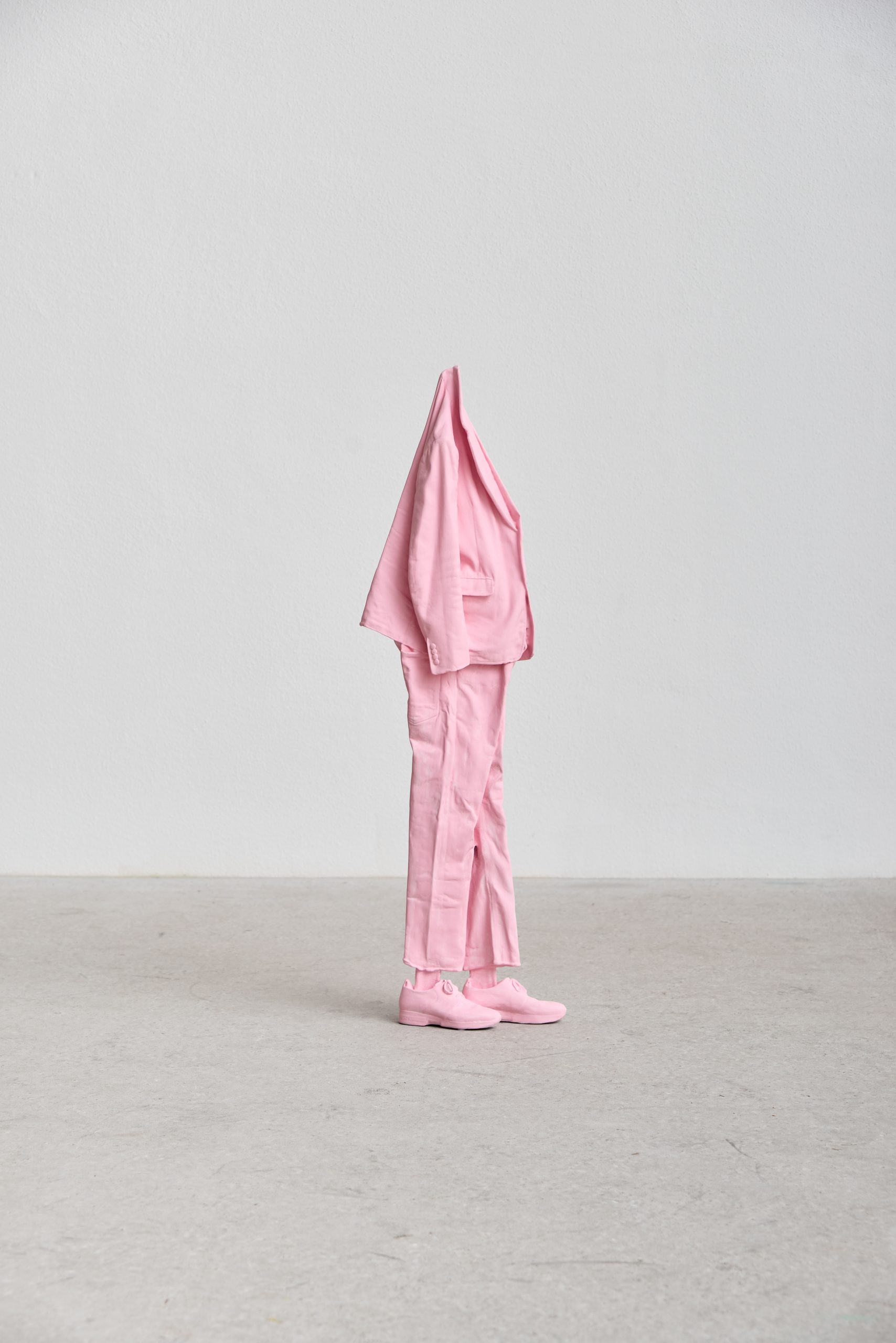
Erwin Wurm, Waiting Pink Small (Substitutes series), 2024. Courtesy of the artist and Lehmann Maupin, New York, Seoul, and London
ABOUT THE ARTISTS
Erwin Wurm (born 1954, in Bruck an der Mur, Austria) is an internationally acclaimed Austrian artist whose work has been exhibited extensively in galleries, museums, and public art spaces around the world. His solo exhibitions have been presented at institutions including the Public Art Fund in New York, the Ludwig Museum, the Sara Hildén Art Museum, the Indianapolis Museum of Art, GEM – Museum for Contemporary Art, the Lehmbruck Museum, the Musée des Beaux-Arts, the Museum of Contemporary Art Australia, the Berlinische Galerie, the Albertina Museum Vienna, and Albertina Modern. Wurm is represented by König Galerie, Thaddaeus Ropac, and Lehmann Maupin. Among numerous honors, he has received the Grand Austrian State Prize and the 59th GNMH Award. His works are held in major public and private collections worldwide, including those of the Walker Art Center, the Solomon R. Guggenheim Museum, Museum Ludwig, the Peggy Guggenheim Collection, Kunstmuseum St. Gallen, the Musée d’Art Contemporain de Lyon, the Museum of Old and New Art, and the Centre Pompidou. He is represented by Thaddaeus Ropac, König Gallery, and Lehmann Maupin.
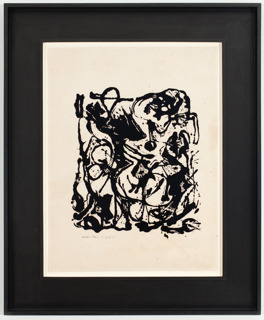
Jackson Pollock; Enamel after Number 19, 1951. Private Collection, Switzerland. Courtesy of Art Connection SA, Geneva. © The Pollock-Krasner Foundation/Artists Rights Society (ARS), New York.
Paul Jackson Pollock (1912–1956) was an American painter and a major figure of the Abstract Expressionist movement. Widely known for his revolutionary technique, Pollock poured, dripped, and splashed liquid household paint onto canvases laid horizontally on the floor, allowing him to work from all sides and engage the entire surface of the painting. Often described as both “all-over painting” and “action painting,” his intensely physical and spontaneous process involved the movement of his whole body, at times resembling a frenetic dance. His radical approach to abstraction divided critics, with some praising the immediacy and energy of his process while others dismissed its seemingly random effects. In 1945, he married the artist Lee Krasner, whose artistic insight and support played an important role in his career and whose advocacy helped shape his legacy after his death. Pollock died in 1956 at the age of 44 in an alcohol-related car accident. His work was the subject of a memorial retrospective at the Museum of Modern Art (MoMA) in New York four months after his death, followed by a larger retrospective there in 1967. Major retrospectives at MoMA and Tate Gallery in London in 1998 and 1999 further affirmed his enduring significance. Concurrent with this exhibition, from October 4, 2026, through January 31, 2027, the Metropolitan Museum of Art will present Krasner and Pollock: Past Continuous, the first major New York exhibition devoted to either artist in more than two decades and the first to examine the full arc of their careers together.
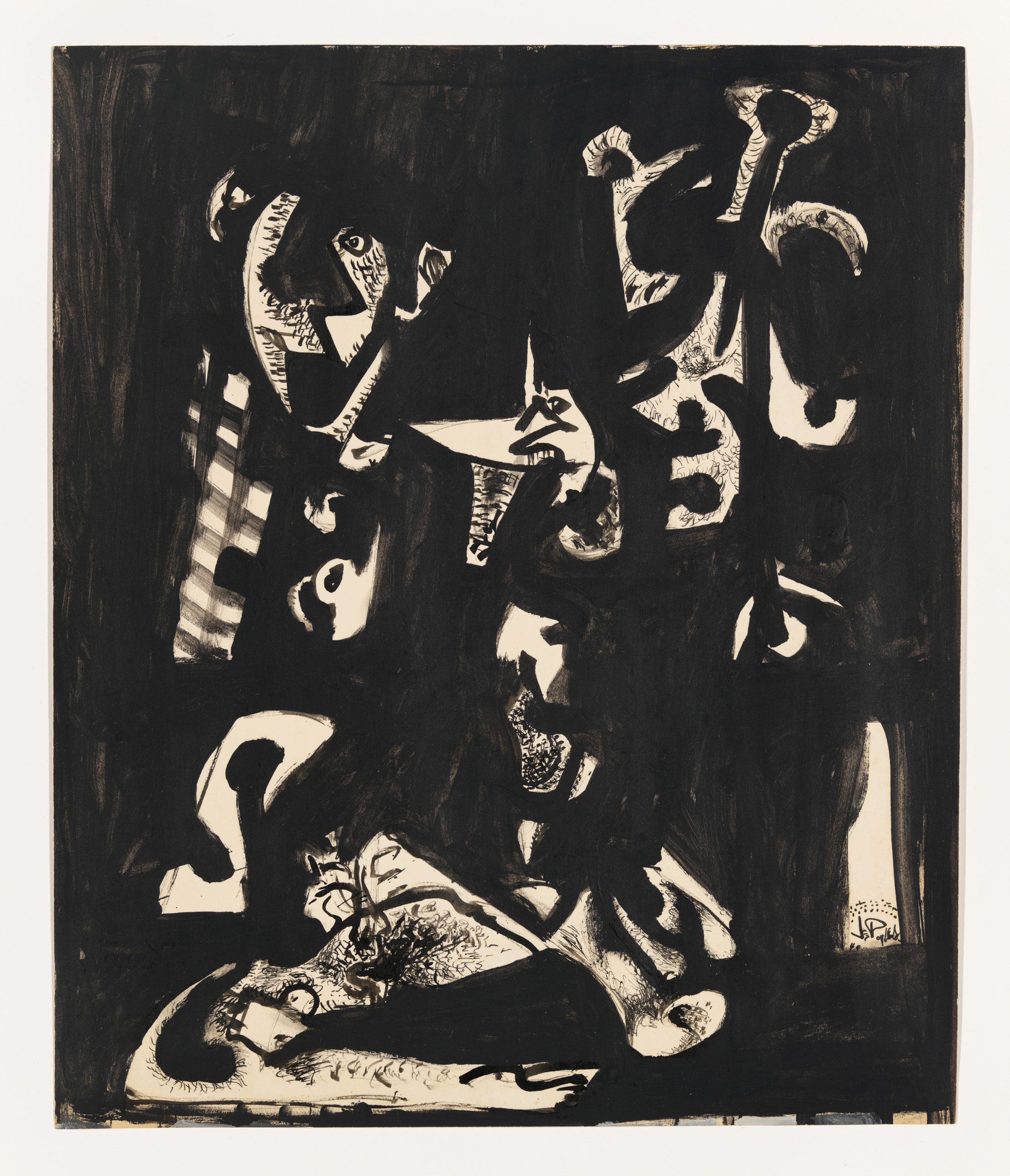
Jackson Pollock, Untitled, 1944. Pen, brush and ink, and opaque watercolor on paper, 13 1/8 × 11 in. (33.3 × 27.9 cm). Whitney Museum of American Art, New York; purchase with funds from the Julia B. Engel Purchase Fund and the Drawing Committee 85.20. © The Pollock-Krasner Foundation/Artists Rights Society (ARS), New York
Samuel Barclay Beckett (1906–1989) was an Irish playwright, novelist, and poet whose works, written in both English and French, are characterized by their bleak, impersonal, and tragicomic portrayals of human existence, dark humor, and literary experimentation. Widely regarded as one of the most influential writers of the 20th century, Beckett transformed modern theatre and is best known for his seminal play Waiting for Godot (1953). In recognition of his foundational contribution to literature and theatre, he was awarded the Nobel Prize in Literature in 1969. From 1966 to 1986, Beckett created a series of television plays for Süddeutscher Rundfunk, including Eh Joe, Ghost Trio, …but the clouds…, Quad I and II, Nacht und Träume, and What Where. Developed in close collaboration with the broadcaster, these works explored the possibilities of television as an artistic medium, engaging with new technologies of production while extending the formal innovations that had defined Beckett’s earlier theatre and prose. At the same time, the television plays marked a significant departure from his previous work, reflecting the new creative possibilities and constraints arising from the specific conditions of television production.
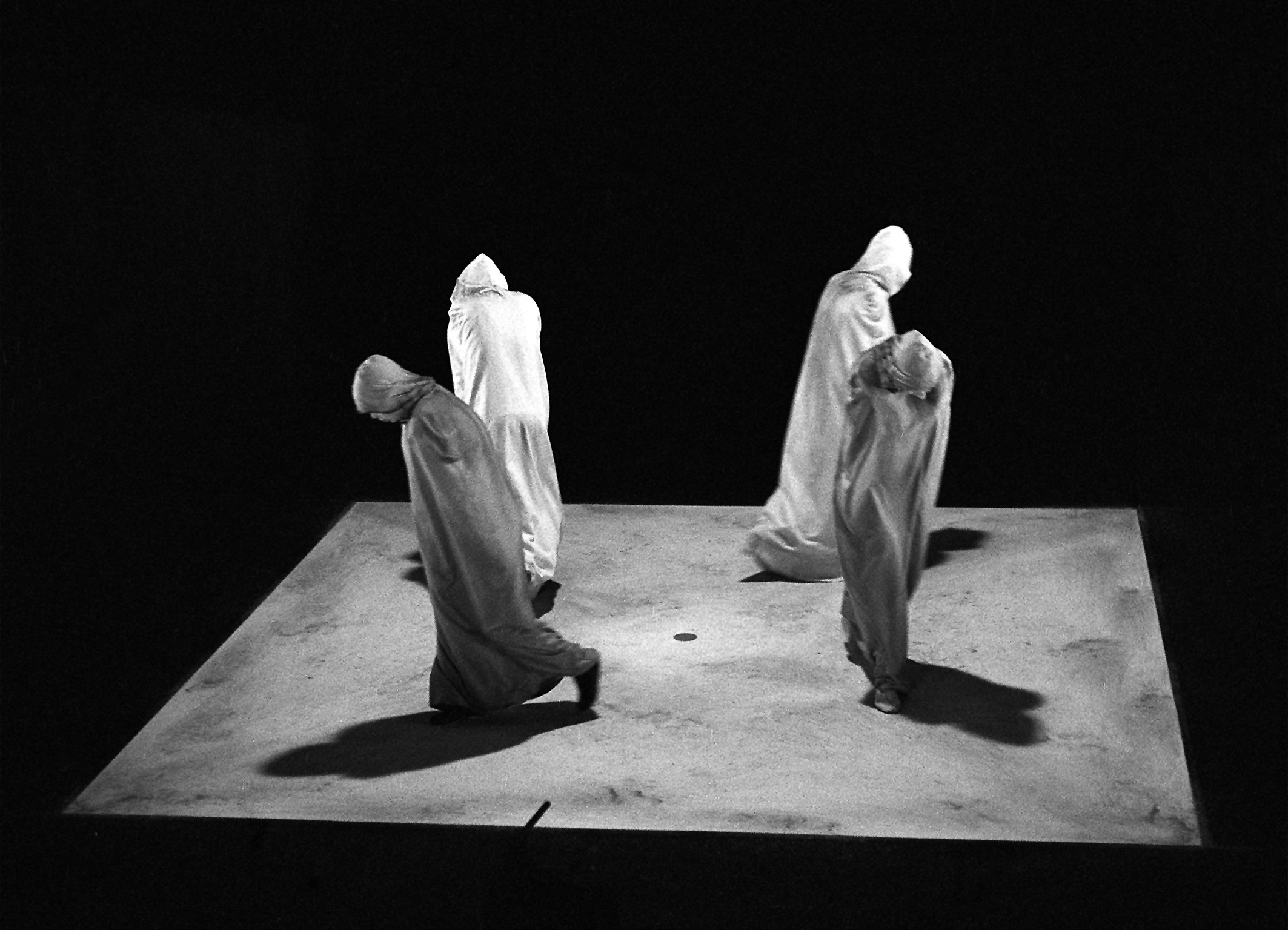
Quad II, October 8, 1981. Director: Samuel Beckett (assisted by Bruno Voges). Performers: Members of the Stuttgart Preparatory Ballet School. Courtesy of Süddeutscher Rundfunk (SDR).
CURATORS
Dr. Stephanie Buhmann: Head of Visual Art, Architecture & Design at the Austrian Cultural Forum New York. An art historian, curator, and writer, she has published extensively on modern and contemporary art, with essays appearing in numerous books, international art journals, magazines, and newspapers. She has curated dozens of exhibitions and conducted more than ninety published interviews with contemporary artists. In 2013, she initiated the ongoing Studio Conversations series, published by The Green Box, Berlin, dedicated to dialogues with women artists from different generations working across diverse media. Her recent publications include Frederick Kiesler: Galaxies (The Green Box, Berlin, 2023), Roma Artist Ceija Stojka: What Should I Be Afraid of? (Hirmer Publishers, 2024), Touch Nature: Art in the Age of the Climate Crisis (Böhlau, 2024), Across Time. Form and Space. Judith P. Fischer and Uwe Hauenfels (The Green Box, Berlin, 2025), and Ernst Caramelle: two dots one line (The Green Box, Berlin, 2025), Vally Wieselthier: Sculpting Modernism (The Green Box, Berlin, 2026), and Inspiration Comes from Everyday Life: Elfie Semotan and Nina Hollein (The Green Box, Berlin, 2026).
Dr. Gerald Matt is a curator, author, and talk show host. Since 2013, he has served as Director of the Art Institute Vienna and, since 2019, as President of Kunstraum Dornbirn. From 1996 to 2012, he was Director of the Kunsthalle Wien and a board member of the Ludwigstiftung Wien. Matt currently lectures at the Institute of Cultural Management in Vienna and has previously held teaching positions at the University of Applied Arts in Vienna, CIAM in Cologne, and the Institute of Art History in Innsbruck. Among his recent curatorial projects are The Camera is Cruel: Model Arbus Goldin at the Flatzmuseum in Dornbirn, the 3rd Industrial Biennial in Labin, Raša, Pula, and Rijeka, and an exhibition on Shirin Neshat at the Neuer Kunstverein, Vienna. He has published numerous books and studies, including Bella, Donna: Austrian Female Artists 1960–1980 (2024), The Art of Museum Management (2019), Artists Talk (2014), Österreichs Kunst der 60er Jahre (2011), Studie zur Errichtung eines nationalen Photomuseums (2018), and Feasibility Study for the New Flatzmuseum (2023). In 2023, Matt was awarded the Österreichisches Ehrenkreuz für Wissenschaft und Kunst 1. Klasse (The Austrian Decoration for Science and Art) by President Alexander Van der Bellen
ACFNY
Dr. Susanne Keppler-Schlesinger: Director at the Austrian Cultural Forum New York is an Austrian career diplomat and has been working in the field of multilateral and bilateral diplomacy for more than 30 years. Her previous assignments include positions in Vienna, Paris and New York. She also served as Dep. Director of the Vienna School for International Studies/Diplomatische Akademie Wien. She holds a PhD in Musicology, French language and literature from the University of Vienna and a diploma as a concert pianist from the Vienna Conservatory of Music.